
How much does a website cost, and how do you know if it pays off
Market price ranges by type of site, what makes the figure move, the recurring costs everyone forgets, the questions to ask before signing, and the five indicators that tell you whether the site is working for you.
“How much does a website cost?” The honest answer begins with “it depends”, but stopping there helps nobody. You deserve clear ranges, a list of what makes the figure move, and above all the second half of the question, the half that is rarely asked: how will you know, six months from now, whether the money was well spent?

Market ranges
| Type of site | Indicative range |
|---|---|
| One-page site, built for conversion | €500–€1,500 |
| Five- to eight-page brochure site | €1,500–€5,000 |
| Online shop | €3,000–€15,000 |
| Bespoke web application | From €8,000 |
These ranges cover the gap between a freelancer adapting an existing template and an agency designing everything, content included. They say nothing about quality: there are excellent projects at the bottom of a range and disappointments at the top. It is the following five factors that move the needle, and our price list sets out line by line what we charge for each format.
What pushes the figure up or down
Design. Adapting a proven template costs a fraction of a fully bespoke creation. The question is not which is better, but whether your market expects visual distinctiveness — for a local tradesperson, rarely; for a brand that sells its style, always.
Content. This is the most underestimated line and the leading cause of delay. Do you have the copy, the photographs, the descriptions? If not, they have to be produced, and that is a craft in its own right. A quote that does not state whether content is included cannot be compared with one that does.
Features. Online payment, booking, a members' area, multilingual versions: each one adds development, testing and maintenance. A feature that will never be used costs twice over — once to build, then again at every change.
Optimisation. A site designed to be found takes more work up front, and it is the one that pays off. The difference is invisible on delivery day; it shows in the sixth month.
Performance. A fast, accessible site is designed that way from the start, it cannot be retrofitted. Adding speed after the event costs more than building it into the architecture.
The recurring costs everyone forgets
A website is not a one-off purchase. The domain name costs around ten euros a year. Hosting ranges from free — for a modern static site served by a content delivery network — to a few tens of euros a month for a heavier architecture. Maintenance covers updates, backups and security, and its cost depends directly on the technology chosen: a site resting on a stack of plugins demands constant supervision, whereas a static site has almost no attack surface. Then come the changes and additions, which are the sign of a living website.
This is the moment to note a practical consequence: the technical choice made at the outset weighs more heavily on the total cost than the price of the initial build. We set out that trade-off in our comparison.
Freelancer, agency or platform: what you are really buying
Three ways of going about it, three kinds of risk, and price is only the consequence.
The self-service platform is the cheapest and leaves you on your own. It suits a simple, stable need perfectly, when someone on your side has the time and the inclination to look after it. Its real cost is yours: count the hours you will spend on it, put a value on them, and the arithmetic starts to speak. Its other cost is lock-in — the content and the structure belong to the platform, and leaving has a price.
The freelancer offers the best value for money when the scope is clear and the person is competent. The risk is not quality, which is often excellent, but continuity: one spell of unavailability, one change of career, and the site is left with nobody who knows how it works. You guard against that by insisting on documentation and full ownership of the credentials, from the outset.
The agency costs more because it carries several disciplines — strategy, design, development, copywriting, measurement — and continuity of service. It is justified when the website is an acquisition channel rather than a business card. It is not justified for a standard need that a freelancer will handle just as well for less, and an honest agency will say so.
In all three cases, the real question is not “how much” but “who picks up the work if the person opposite disappears”. A site whose code, credentials and documentation belong to you will withstand any change of supplier; a site of which you own nothing leaves you the choice between paying what you are asked and starting again from scratch.
The five questions to ask before signing
To compare two quotes without going wrong, you have to bring them back to the same scope. Five questions almost always do the job. Is the content — copy and images — included, or expected from you? Will the site be optimised for search and genuinely fast, against verifiable criteria? Will you own the code, the credentials and the domain name? What exactly does maintenance cover, and for how long? What are the lead times, and what are they conditional on?
A serious supplier answers those five questions without hesitating. The one who dodges the question of code ownership is in fact answering no.
Think in returns, not in spending
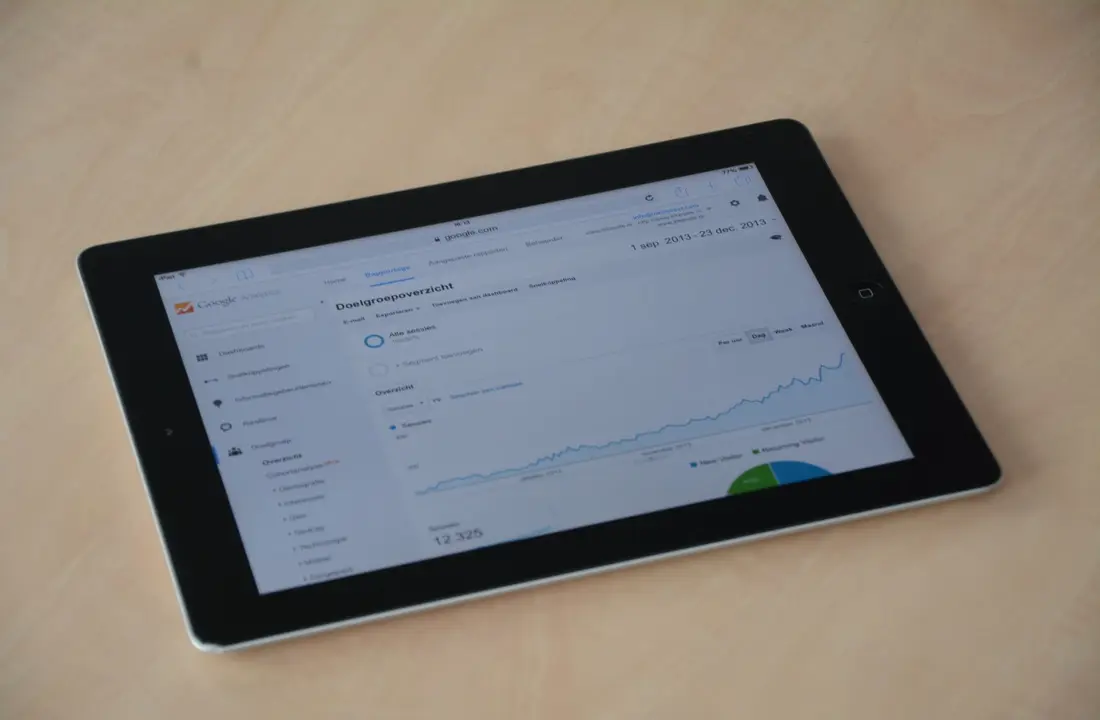
A cheap site that brings nobody in costs more than a dearer site that brings in customers every week. It is an obvious point, made everywhere and almost never put into figures — when it takes three lines to do so.
What is a new customer worth to you, margin included? How many customers a month does the site need to bring in? Multiply, then compare with the total cost over a year. If a customer is worth €500 and the site brings in three a month, it generates €18,000 of annual value: an investment of €4,000 is paid back within the first quarter. If the same site brings in only one customer every two months, the conclusion is reversed, and it is better to find that out early.
The calculator runs that sum on your own figures, including for automation components.
The five indicators that tell the truth
The formula fits on a single line: the return equals the value generated minus the cost, divided by the cost. All the work lies in measuring the value generated, and five indicators are enough for that.
Traffic, read properly. The number of visitors matters less than where they come from and how they behave. Organic traffic is generally the most profitable, because it does not stop when the budget stops.
The conversion rate. The most important of the five: the share of visitors who complete the intended action. Going from 1 to 2% doubles your results without a single extra visitor — and it is almost always cheaper than doubling the traffic.
The acquisition cost. Your marketing budget divided by the number of customers won. It means nothing on its own; it means everything alongside the next one.
The lifetime value of a customer. What a customer brings in across the whole relationship, not on the first order. A ratio between that value and the acquisition cost above three signals a healthy model; below one, a leak.
Micro-conversions. Downloads, sign-ups, clicks through to the contact page. They measure engagement ahead of purchase and show where the journey breaks down.
| Indicator | What it tells you | Desired direction |
|---|---|---|
| Visitors per month | Reach | Rising |
| Conversion rate | Effectiveness | Above 2% |
| Enquiries per month | Pipeline supply | Rising |
| Acquisition cost | Profitability of acquisition | Falling |
| Customer value / acquisition cost | Health of the model | Above 3 |
Putting measurement in place
Five steps, half a day. Install audience analytics, preferably cookie-free and GDPR-compliant. Define what counts as a successful action — and keep only one or two, not eight. Attach a value to it: what an enquiry is worth, what a customer is worth. Record the five indicators once a month, on a fixed date. Then decide: where to invest, what to optimise, what to stop.
The classic mistake is to follow the flattering indicators — raw views, mentions, impressions — instead of the commercial ones. A heavily visited page that does not convert is worth less than a quiet page that brings in customers; that is uncomfortable to admit, and it is the first useful decision that measurement produces.
Going further
The price list gives our prices line by line, with no quote required. The calculator works out the expected return on your own volumes. The comparison places our formats against the alternatives on the market, and our websites set out what each package covers. For a costing on your own specific project, write to us: the quote is free and the scope is set down in black and white.
Frequently asked questions
Do you charge for a quote?
Not with us, and that is the norm in this trade: a quote is a sales document, not a service. A thorough scoping exercise, on the other hand — detailed site map, mock-ups, specifications — is real work, and it is entirely legitimate for it to be invoiced. Simply check what the word covers before comparing two proposals.
Can I pay in instalments?
That is common practice. The usual pattern is a deposit on order and the balance on delivery, sometimes with an intermediate stage on longer projects. What matters more than the number of instalments is what triggers each one: a payment tied to a specific deliverable protects both parties.
What conversion rate should I be aiming for?
It varies a great deal by sector, but 2 to 5% is a reasonable benchmark for a services website. More useful than any comparison with the market: your own figure from last month. It is the progression that informs a decision, not the average of a sector that looks nothing like yours.
Do I need paid tools to measure?
Not to begin with. Simple audience measurement, GDPR-compliant and free of cookies, plus a monthly review written down in a spreadsheet, is enough to make sound decisions for a long time. Paid tools become useful once you have the volume to segment.
Should I go with the cheapest supplier?
Price on its own says nothing until the scope is identical. A very cheap site that brings nobody in costs more than a dearer site that brings in customers every week. Compare like for like — content included or not, optimisation and speed, ownership of the code, maintenance, lead times — and the ranking often changes.
Will I own my website?
You should, and that is the question to ask explicitly. Ownership of the code, of the hosting credentials, of the domain name and of the third-party accounts. A site whose keys you do not hold is not an asset, it is a subscription — which can be a defensible choice, provided you know it before you sign.
Want us to handle it for you?
We put these exact methods to work on your business to deliver measurable outcomes.
Start my project